CERCAP Members
The Center for Research on Consciousness and Anomalous Psychology (CERCAP) consists of a group of researchers and associates dedicated to the scientific study of unusual but not necessarily pathological experiences and events, including reputed parapsychological phenomena. We have published influential books and empirical studies in collaboration with many multidisciplinary, international collaborators. We endorse programmatic research using a plurality of methodologies, and are open to diverse perspectives in this area, as long as they are informed and respectful. Our aim is to continue developing multidisciplinary, national, and international collaborations, and train undergraduate and graduate students in a supportive environment.
Current/Transitioning Students and RAs
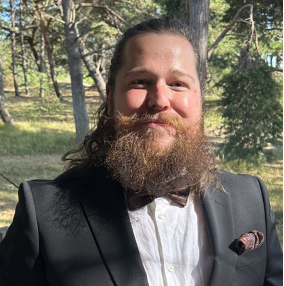
Kevin Ekstrand Odd
PhD studentKrin Ekstrand Odd, M. Sc., is a PhD student at Lund University, developing and validating a taxonomy of non-ordinary states of consciousness using natural language processing and topic-modeling. He is gathering first-hand recollections of people describing their experience, for instance of states of disorganized thought and behavior. He is also active in the Harmony Research Group from Lund University, and also sculpts with ceramic clay.
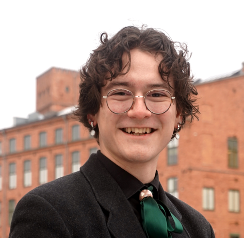
Enzo Soares Gil
Project assistantEnzo Soares Gil started working as a project assistant on detecting experiences of spirit communication/interaction from text, and preparing them for an LLM. Enzo currently studies his master's in computational social science at Linköping University, where he is learning about NLP and Computational Text Analysis.
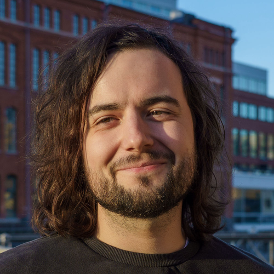
Marc Sparhuber
Project assistantMarc Sparhuber, M. Sc., has been working as a project assistant on detecting experiences of spirit communication/interaction from text, and preparing them for LLM. Marc has gone on to start a Ph. D. at the Leibniz Institute for Research and Information in Education in Frankfurt, Germany. He’s in a project researching disinformation targeted at migrants who have recently arrived in Germany. https://www.dipf.de/de/institut/personen/sparhuber-marc#0
Other Bright Supervised Students
Before I took the position at Lund, I supervised two outstanding dissertations that became publications:
1) Perhaps first use of experiential sampling with meditators, in Barbara Easterlin’s work: Easterlin, B. & Cardeña, E. (1998-99). Perceived stress, cognitive and emotional differences between short-and long-term Vipassana meditators. Imagination, Cognition and Personality, 18, 69-82.
2) A comparison of patients with seizure and functional seizures, in Richard Litwin’s work: Litwin, R., & Cardeña, E. (2000). Demographic and seizure variables, but not hypnotizability or dissociation, differentiated psychogenic from organic seizures. Journal of Trauma and Dissociation, 1, 99-122. Also, Cardeña, E., Pick, S., & Litwin, R. (2020). Differentiating psychogenic non-epileptic from epileptic seizures: A mixed-methods content analysis study. Epilepsy & Behavior, 109. doi:10.1016/j.yebeh.2020.107121
At Lund, I have supervised various outstanding non-doctoral studies and theses on CERCAP topics that became publications:
a) Xu, Y., & Cardeña, E. (2008). Hypnosis as an adjunct therapy in the management of diabetes. International Journal of Clinical and Experimental Hypnosis, 56, 63-72.
b) Cardeña, E., Svensson, C., & Hejdström, F. (2013). Hypnotic taped intervention ameliorates stress: A randomized control study. International Journal for Clinical and Experimental Hypnosis, 61, 125-145.
c) Kjellenberg, E., Nilsson, F., Daukantaitė, D., & Cardeña, E. (2014). Transformative narratives: The impact of working with war and torture survivors. Psychological Trauma: Theory, Research, Practice, and Policy, 6, 120-128.
d) Cardeña, E., Sjöstedt, J. O., & Marcusson-Clavertz, D. (2015). Sustained attention and motivation in Zen meditators and non-meditators. Mindfulness, 6, 1082-1087.
e) Stiernströmer, E. P. S., Wolgast, M., Johansson, M., Innes-Ker, Å., & Cardeña, E. (2018). The effect of variations of emotional expressions on mnemonic discrimination and traditional recognition memory. Journal of Cognitive Psychology.doi doi.org/10.1080/20445911.2018.1493486
f) López-Macal, M., & Cardeña, E. (2022). Mayan and Swedish attitudes and practices toward death. Death Studies, 46(8), 1909-1922. https://doi.org/10.1080/07481187.2020.1867253
g) Palmborg, Å., Lötvall, R., & Cardeña, E. (2022). Acute stress among healthcare workers during the COVID-19 pandemic. European Journal of Trauma and Dissociation,, 6(3). https://doi.org/10.1016/j.ejtd.2022.100283
h) Lötvall, R., Palmborg, Å, & Cardeña, E. (2022). A 20+ review of the Stanford Acute Stress Reaction Questionnaire (SASRQ) Psychometric properties and findings. European Journal of Trauma and Dissociation, 6(3). https://doi.org/10.1016/j.ejtd.2022.100269
i) Sigurdsson, E., & Cardeña, E. (2024). Dissociation among transgender people: A qualitative study. Journal of Trauma & Dissociation, 2(5), 561-581. https://doi.org/10.1080/15299732.2024.2372563
j) Melloul Ait, A., Kinnunen, K., & Cardeña, E. (2024). The phenomenology of distressing near-death experiences and their aftereffects. Journal of Anomalous Experience and Cognition, 4(2), 192-224. https://doi.org/10.31156/jaex.25433
k) Mässing, A., & Cardeña, E. (2025). The relation between post-migration stressors and trauma treatment outcomes: A scoping review. European Journal of Psychotraumatology16(1). https://doi.org/10.1080/20008066.2025.2570929
Past Doctoral Students and RAs
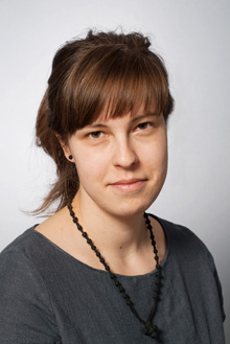
Sandra Buratti, Ph. D.
past RASandra Buratti's research interests are in cognitive psychology, with a focus on judgment, decision-making, learning, and metacognition. Her research examines the cognitive processes that shape learning, reasoning, and human judgment.
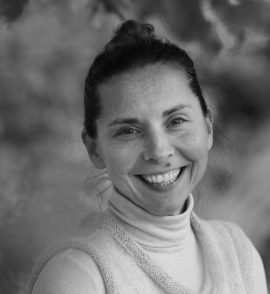
Sabina Gušić, Ph. D.
past doctoral studentPhoto by Max Thorsson
Sabina Gušić is a licensed senior clinical psychologist whose work centers on innovations in pediatric mental health research. She is primarily affiliated with the Department of Clinical Sciences at Lund University and a research unit at BUP Skåne. Her expertise spans trauma assessment and treatment, PTSD/CPTSD, dissociation, anxiety disorders, and refugee psychology. https://portal.research.lu.se/sv/persons/sabina-gusic/
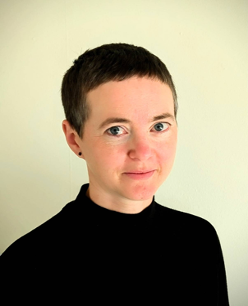
Lena Lindström, Ph. D.
past doctoral studentLena Lindström’s research concerns alterations of the sense of self, both as a state induced by e.g. psychedelics, and as a trait e.g. following years of meditation, with a mixed-methods approach rooted in phenomenological interviews. She uses fMRI to investigate the neural correlates of self-consciousness as well as visual consciousness, and currently heads the EEG laboratory of the University of Skövde. https://www.his.se/en/about-us/staff/lena.lindstrom/
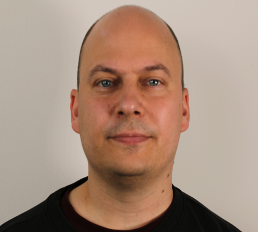
David Marcusson-Clavertz, Ph. D.
past doctoral studentDavid Marcusson-Clavertz's research focuses on two topics. The first is the neurocognitive underpinnings of mind wandering, including the brain mechanisms and executive functions involved when attention drifts and individual differences in the tendency to mind wander. The second is the relation between altered states of consciousness and anomalous experiences and cognition, with a focus on the methodology of this field, including what qualifies as reproducible evidence for purported phenomena like precognitive dreams. https://www.lnu.se/personal/david.marcussonclavertz
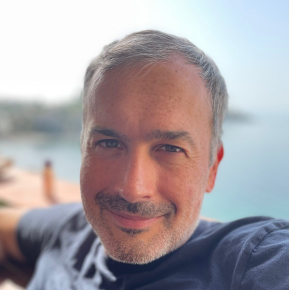
Devin B. Terhune, Ph. D.
past doctoral studentDevin B. Terhune is a Reader in Experimental Psychology in the Department of Psychology in the Institute of Psychiatry, Psychology, & Neuroscience at King’s College London. His research in the Awareness & Modulation Lab draws on methods and theories from cognitive neuroscience, experimental psychology, and psychiatry to characterise different features of awareness, with a focus on dissociative states, and how they can be modulated using verbal suggestion and pharmacological agents.