
HYPNOSIS AND RELATED PHENOMENA
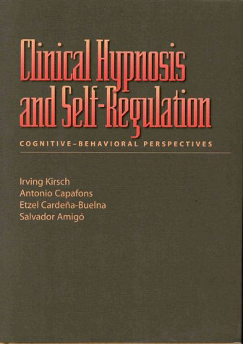
My licenciate thesis and doctoral dissertation were on hypnosis, an area I continue to find fascinating. Among my areas of interest are:
Research on the phenomenology (Cardeña, 2005) and the neurophenomenology (Cardeña et al., 2013) and neurophenomenology of non-suggested hypnotic phenomena (Cardeña et al., 2013)
Development of hypnotic techniques for the treatment of posttraumatic conditions (Cardeña et al., 2000).
With Devin Terhune, clarfying different types of high hypnotizability (e.g., Terhune & Cardeña, 2010) hypnotizability and related constructs as indicators of a predisposition to enter alternate states of consciousness (e.g., (Cardeña & Terhune, 2014).
With other authors, evaluating hypnosis as an empirically supported clinical intervention (Lynn et al., 2000) and discussing its underlying principles (Lynn et al., 2022).
Comparing the phenomenology of neutral hypnosis of high hypnotizables with that in other contexts such as shamanism, psychedelics, ganzfeld, and others (e.g., Cardeña & Krippner, 2010; Cardeña, 2025).
With respect to meditation, I have sought to clarify the relation between the concepts of hypnosis and meditation (Cardeña, 2016). collaborated on perhaps the first experiential sampling of meditators with Barbara Easterlin (Easterlin & Cardeña, 1998-99), and with Lena Lindström on studies of self-alterations among meditators and others (e.g., Lindström et al., 2023).
Selected References (for others see my CV)
Cardeña, E. (2005). The phenomenology of deep hypnosis: Quiescent and physically active. International Journal of Clinical & Experimental Hypnosis, 53(1), 37-59. Doi: 10.1080/00207140490914234
Cardeña, E. (2016). Towards a comprehensive neurophenomenological research in hypnosis and meditation. In A. Raz & M. Lifshitz (Eds.), Hypnosis and meditation: Towards an integrative science of conscious planes (pp. 281-301). Oxford University Press.
Cardeña, E. (2025). Mind-manifesting hypnosis. Phenomenological similarities and differences between hypnotic and psychedelic contexts. International Journal of Clinical & Experimental Hypnosis, 73(4), 398-413. https://doi.org/10.1080/00207144.2025.2554069
Cardeña, E., Jönsson, P., Terhune, D. B., & Marcusson-Clavertz, D. (2013). The neurophenomenology of neutral hypnosis. Cortex, 49, 375-385. http://dx.doi.org/10.1016/j.cortex.2012.04.001
Cardeña, E., & Krippner, S. (2010). The cultural context of hypnosis. In S. J. Lynn, S. J. W. Rhue, & Kirsch, I. (Eds.) Handbook of clinical hypnosis 2nd Ed (pp. 743-771). American Psychological Association.
Cardeña, E., Maldonado, J., van der Hart, O., & Spiegel, D. (2000). Guidelines for the use of hypnosis. In E. Foa, T. Keane, & M. Friedman (Eds.). Effective treatments for PTSD (pp.553-556). Guilford.
Cardeña, E. & Terhune, D. B. (2014). Hypnotizability, personality traits, and the propensity to experience alterations of consciousness. Psychology of Consciousness: Theory, Research, and Practice, 1, 292-307. http://dx.doi.org/10.1037/cns0000026
Easterlin, B. & Cardeña, E. (1998-99). Perceived stress, cognitive and emotional differences between short-and long-term Vipassana meditators. Imagination, Cognition and Personality, 18, 69-82.
Lindström, L., Goldin, P., Mårtensson, J., & Cardeña, E. (2023). Nonlinear brain correlates of trait self-boundarylessness. Neuroscience of Consciousness. Published online, doi: 10.1093/nc/niad006
Lynn, S. J., Cardeña, E., Green, J., & Lawrence, J-R. (2022). The case for clinical hypnosis: Theory and research-based dos and don'ts for clinical practice. Psychology of Consciousness: Theory, Research, and Practice, 9(2), 187-200. http://dx.doi.org/10.1037/cns0000257
Lynn, S. J., Kirsch, I., Barabasz, A., Cardeña, E., & Patterson, D. (2000) Hypnosis as an empirically supported clinical intervention: The state of the evidence and a look to the future. International Journal of Clinical and Experimental Hypnosis, 48, 235-255.
Terhune, D. B., & Cardeña, E (2010). Differential patterns of spontaneous experiential response to a hypnotic induction: A latent profile analysis. Consciousness and Cognition, 19, 1140-1150.